

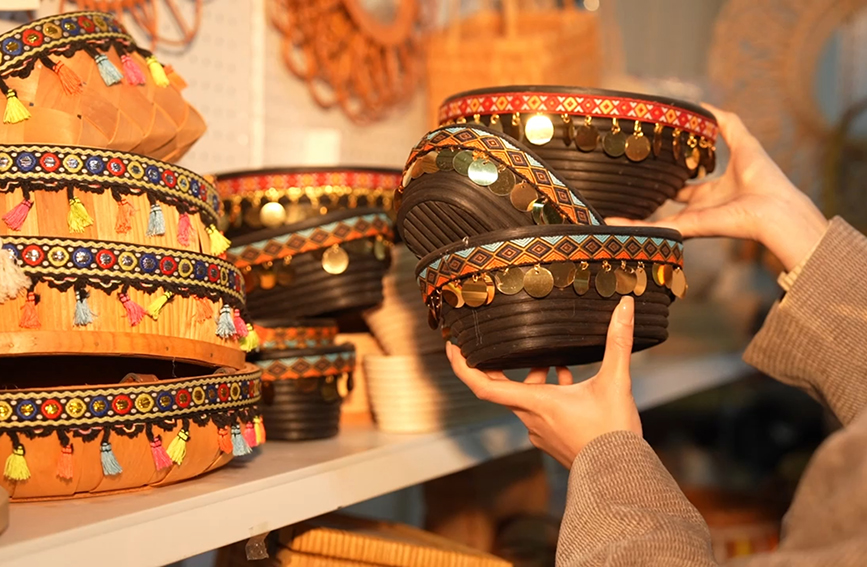
Pingshan Town, at the southernmost tip of Pingnan County in China’s Guangxi region, has a long weaving tradition and is widely known as a renowned hub of woven crafts. The local craft of weaving with bamboo, wood, rush and rattan dates back to the Qing Dynasty. Using local bamboo, wood, rush and rattan as its main materials, the process involves dozens of steps—cutting the green, color toasting, slicing and silking—and blends in elements of calligraphy and painting, giving the finished pieces both practical function and artistic value. Through generations of dedicated craftsmanship, the town has built an export-oriented weaving industry centered on craft baskets, boxes, home décor and ceremonial torches. It has become a pillar of the local economy, driving development while nurturing a distinctive weaving culture.
A Heritage Recognized as Intangible Cultural Heritage
In 2016, the bamboo, wood, rush and rattan weaving craft of Pingnan County was inscribed in the sixth batch of the autonomous region’s intangible cultural heritage list. The craft is mainly distributed across towns such as Pingshan, Simian, Liuchen, Siwang and Sijie, with Pingshan Town developing the fastest.
A Billion-Yuan Export Industry
Today, Pingnan County is home to 30 weaving enterprises of various sizes, including 25 with independent export rights and 15 above designated size. Around 90% of local woven products are exported to overseas markets across Europe, North America, East Asia and Southeast Asia. In 2024, the export sales of Pingnan’s bamboo, wood and rattan weaving enterprises exceeded 350 million yuan. The vast majority of these exports come from Pingshan Town, which has become a leading center of woven crafts and a major source of export earnings for both Pingnan County and the city of Guigang.
How an Old Craft Became a Billion-Yuan Industry
How does an intangible-cultural-heritage “old craft” weave a billion-yuan industry?
Almost every household in Pingshan Town has skilled weavers, and the heritage skill thrives in the fields and villages alike. Bamboo, wood, rush, rattan, iron, banana fiber, tree bark—here, it seems everything can be woven. Ordinary bamboo strips, wood sticks or rattan vines, intertwined by the hands of artisans, become exquisite handbags, vases and fashionable bags. Today, this “old craft” not only preserves its traditional charm but also embraces modern aesthetics, becoming an “international” product that blends eco-friendliness with fashion.
Workshops That Empower Communities
In recent years, Pingshan Town has treated ethnic handicrafts as a key way to drive employment and entrepreneurship among people of all ethnic groups and promote integrated development. It has worked to cultivate a group of representative bearers of excellent traditional ethnic handicraft heritage and well-known folk artisans with the ability to integrate and innovate. Yu Mei, a regional representative bearer of the Pingnan bamboo, wood, rush and rattan weaving heritage, founded a workshop of more than 300 square meters that mainly fulfills orders from local weaving enterprises. The workshop adopts a flexible family-production model, with workers from nearby villages enjoying free working hours. It generates an annual output value of around 800,000 yuan and provides over 120 local jobs.
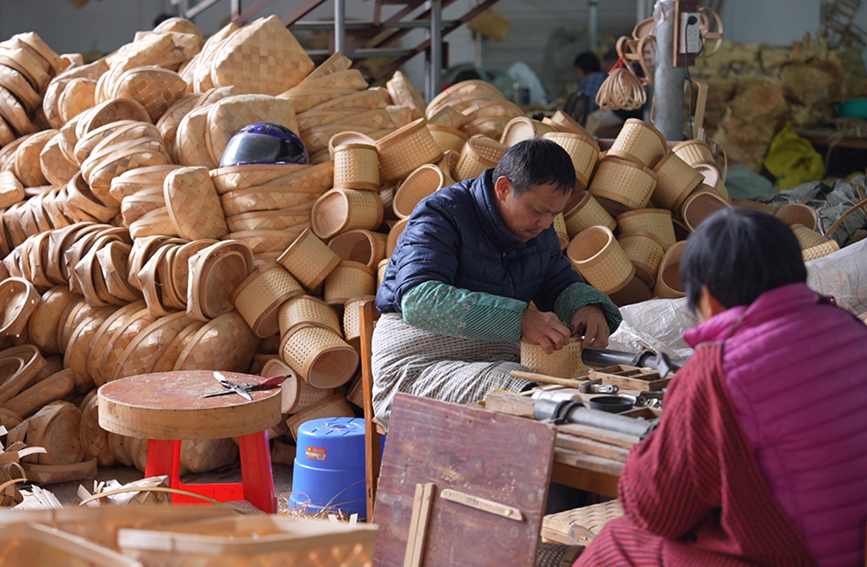
To accelerate the upgrading of the weaving industry, Pingnan County planned and built the Pingshan Weaving Craft Park. Local enterprises adopt a “company + farmer + job position” development model, producing through decentralized weaving and centralized assembly and finishing. This has created more than 10,000 local jobs, further broadening farmers’ income channels. Those engaged in weaving earn an average annual increase of around 20,000 yuan, turning the fingertip heritage into a “golden key” that boosts rural revitalization.
Innovation Inside the Weaving Workshop
Inside the weaving workshop of Guangxi Best Crafts Co., Ltd., located in the Pingshan Weaving Craft Park, workers can be seen methodically selecting rattan, weaving bases, forming bodies and attaching handles. The company’s showroom displays tens of thousands of woven samples. According to Mo Siming, the company’s manager, it invests hundreds of thousands of yuan each year in new product R&D, and its pattern makers design more than ten new styles daily to sharpen its competitiveness in overseas markets. These exquisitely woven heritage products are not only popular with tourists at domestic scenic spots, but also go global through international e-commerce platforms, media and major trade fairs such as the Canton Fair, selling far into overseas markets.
Culture Renews the Craft for the Next Generation
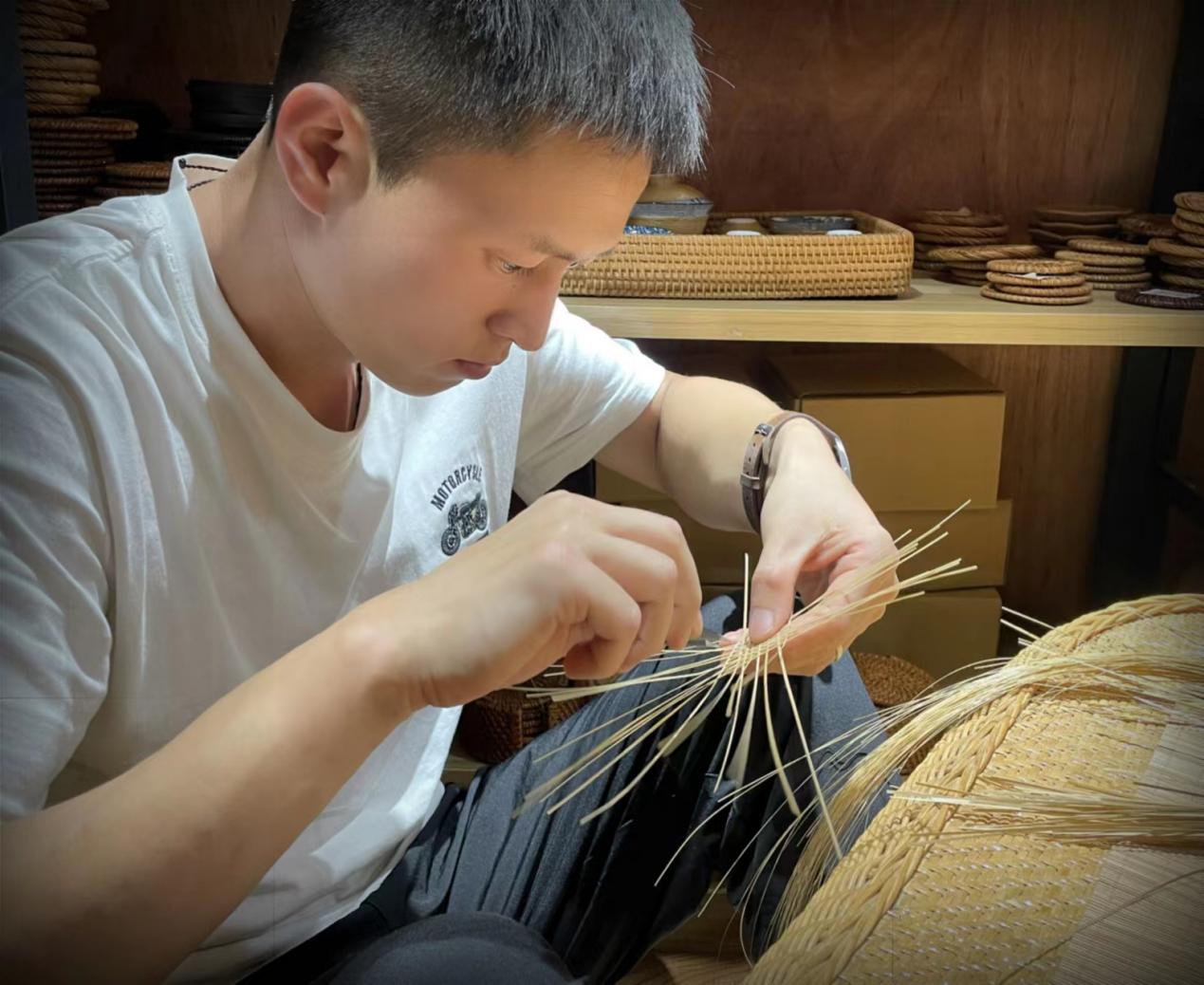
Culture empowers the inheritance and development of the heritage weaving craft. In January this year, Pingnan County launched the “Bamboo-Rush Weaving Charm · Heritage Renewed” themed activity at the Pingshan Weaving Craft Park. Through diverse events such as woven-product exhibitions and “Hanfu + woven crafts” runway shows, it attracted large numbers of young people to experience rattan weaving, showing them that the “old craft” can also weave a new future—and thereby drawing more young people back to their hometowns to start businesses and cultivate a new generation of heritage bearers.
From Mountain Vines to Global Shelves
From mountain vines to international shelves, the people of Pingnan have woven a dual chapter of heritage inheritance and rural revitalization with their skillful hands. On this land, an ancient craft is writing a brand-new story of prosperity. “Every product is a carrier of culture. We must not only preserve our traditions, but let the world see the vitality of China’s intangible cultural heritage.”